
What is Enterprise Risk Management and why does it matter for modern business?
Enterprise Risk Management (ERM) is a structured, organization-wide approach to identifying, assessing, and responding to risks that could impact strategic objectives. I have seen firsthand how ERM transforms reactive crisis management into proactive value creation for my clients across industries. In my experience, companies implementing robust ERM frameworks consistently outperform peers in resilience and strategic agility.
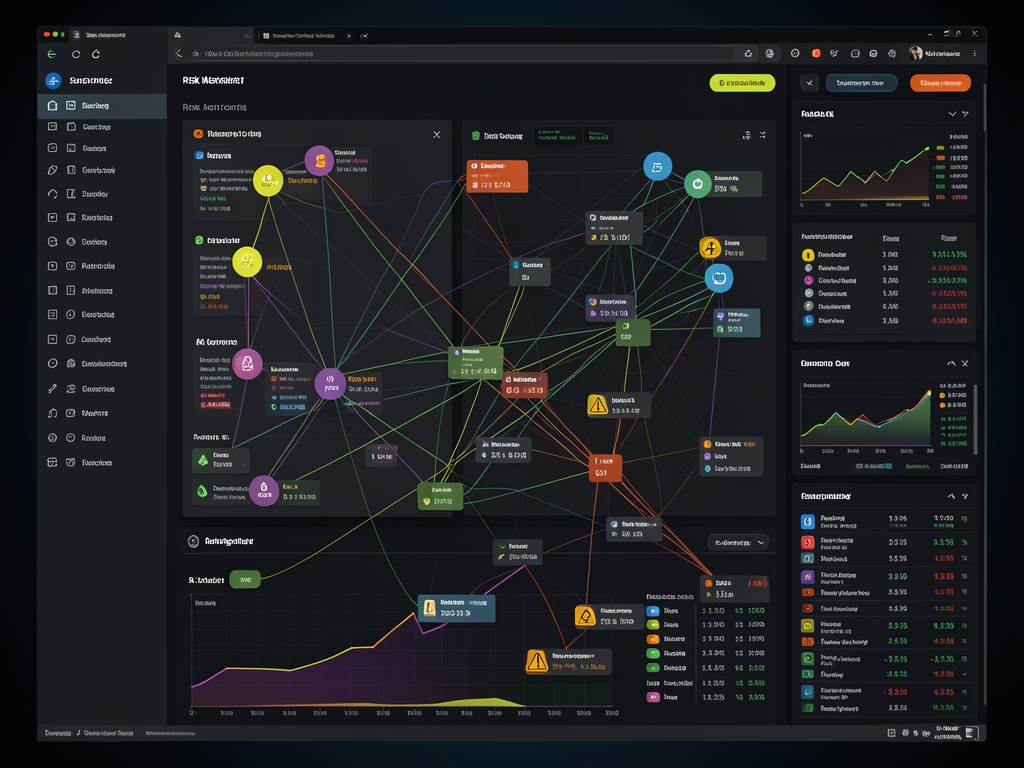
ERM matters now because global volatility demands integrated risk oversight. Traditional siloed risk management fails to capture interconnected threats like cyber-attacks triggering supply chain disruptions or regulatory fines. ERM provides the lens to see these connections and allocate resources where they create maximum protection and opportunity.
How does ERM differ from traditional risk management?
Traditional risk management focuses on isolated risks within specific departments like insurance or safety, often missing enterprise-wide impacts. ERM requires board-level oversight, integrates risk appetite with strategy, and evaluates risks across all business units simultaneously. This holistic view reveals how a single risk event can cascade through operations, reputation, and financial performance.
What are the core components of an effective ERM framework based on COSO?
The COSO ERM framework consists of five interrelated components: Governance and Culture, Strategy and Objective-Setting, Performance, Review and Revision, and Information, Communication, and Reporting. These components form a continuous cycle where each element informs and strengthens the others. I recommend starting with governance assessment before implementing any technical controls.

Governance and Culture establishes tone at the top, defining roles, responsibilities, and ethical values that shape risk awareness throughout the organization. Strategy and Objective-Setting aligns risk tolerance with strategic goals, ensuring risks are evaluated in the context of what the organization aims to achieve. Performance involves identifying and assessing risks using qualitative and quantitative methods, then prioritizing responses based on impact and likelihood.
How do I implement an ERM program in my organization?
Implementing ERM begins with securing executive sponsorship and defining clear scope and objectives aligned with business strategy. Next, conduct a comprehensive risk assessment across all departments to establish a baseline risk profile. Then, design risk response strategies including avoidance, reduction, sharing, or acceptance based on risk appetite and cost-benefit analysis.
Establish key risk indicators (KRIs) to monitor changes in risk exposure over time and integrate reporting into existing management rhythms. Finally, embed ERM into daily operations through training, incentives, and continuous improvement cycles. My clients typically see measurable improvements in risk visibility within 6-12 months of structured implementation.
What role does technology play in modern ERM programs?
Technology enables real-time risk aggregation, automated KRI tracking, and scenario modeling that manual processes cannot achieve. Integrated risk management platforms connect data from finance, operations, HR, and security systems to provide a unified risk view. Advanced analytics identify emerging risks and predict potential impacts before they materialize.
Cloud-based ERM solutions offer scalability and accessibility for distributed teams, while AI-powered tools enhance risk pattern recognition and predictive capabilities. However, technology alone cannot replace strong governance and risk culture; it must serve as an enabler within a well-designed framework. I advise clients to prioritize process design before selecting tools.
How does ERM create strategic value beyond risk avoidance?
ERM creates strategic value by enabling confident decision-making under uncertainty, uncovering opportunities hidden within risk assessments, and building stakeholder trust through transparent risk management. Organizations with mature ERM programs respond faster to market changes and capitalize on calculated risks that competitors avoid. This transforms risk management from a cost center into a growth enabler.
For example, during market entry assessments, ERM identifies regulatory hurdles early, allowing companies to adapt strategies and avoid costly delays. Similarly, supply chain risk analysis often reveals opportunities for diversification or nearshoring that improve both resilience and cost efficiency. Strategic ERM turns risk intelligence into competitive advantage.
| ERM Maturity Level | Characteristics | Typical Outcomes |
|---|---|---|
| Ad Hoc | No formal process; risks managed reactively by individuals | High surprise events; inconsistent risk visibility |
| Defined | Basic risk registers and quarterly reviews established | Improved risk identification; basic reporting in place |
| Managed | Standardized processes; KRIs monitored; board reporting | Proactive risk mitigation; reduced incident frequency |
| Optimized | Integrated with strategy; predictive analytics; continuous improvement | Strategic risk-taking; enhanced resilience; value creation |
What are the most common challenges in ERM implementation and how to overcome them?
Common challenges include lack of executive buy-in, siloed data preventing holistic risk views, and resistance to change from risk-averse or risk-indifferent cultures. I frequently encounter organizations where risk ownership is unclear, leading to gaps in coverage and duplicated efforts. Another frequent issue is treating ERM as a compliance exercise rather than a strategic capability.
To overcome these challenges, start with a clear business case linking ERM to strategic objectives and quantify potential cost savings from avoided losses. Break down data silos through integrated risk platforms and establish cross-functional risk committees with clear accountability. Foster a risk-aware culture through leadership example, targeted training, and recognition of proactive risk management behaviors.
What is the typical timeline for seeing ROI from an ERM investment?
Most organizations begin seeing tangible ROI from ERM investments within 12-18 months through reduced incident costs, lower insurance premiums, and improved operational efficiency. Strategic benefits like faster market entry and better capital allocation often emerge in years 2-3 as risk intelligence informs decision-making. I track ROI using metrics such as risk-adjusted return on capital and reduction in surprise events.
How often should an ERM program be reviewed and updated?
ERM programs require quarterly reviews of risk profiles and KRIs, with comprehensive annual assessments aligned to strategic planning cycles. Significant events like mergers, regulatory changes, or major incidents trigger immediate reassessments. Continuous monitoring through automated controls ensures the program adapts to evolving risk landscapes in real time.
FAQ
What is the difference between ERM and operational risk management?
ERM encompasses all risks affecting strategic objectives across the entire enterprise, including strategic, financial, operational, and compliance risks. Operational risk management focuses specifically on risks arising from internal processes, people, systems, or external events that disrupt day-to-day operations. ERM provides the overarching framework within which operational risk is managed as one component.
Can small businesses benefit from implementing ERM principles?
Yes, small businesses benefit significantly from scaled ERM principles adapted to their size and complexity. Core activities like risk identification, basic risk assessment, and establishing risk ownership provide immediate value without requiring extensive resources. I recommend starting with a simple risk register reviewed quarterly and integrating risk considerations into existing business planning processes.
How does ERM relate to business continuity planning?
ERM and business continuity planning (BCP) are complementary disciplines; ERM identifies and assesses risks that could disrupt operations, while BCP develops specific response and recovery plans for those risks. Effective ERM informs BCP by prioritizing planning efforts based on risk impact and likelihood, ensuring resources focus on the most critical threats to organizational resilience.
Related Articles
For deeper dives into specific aspects of Enterprise Risk Management, explore these related resources:
- Enterprise Risk Management Consulting – Learn how expert guidance accelerates ERM implementation and avoids common pitfalls.
- Enterprise Risk Management Programs – Discover how to structure and scale ERM initiatives for maximum organizational impact.
- Enterprise Risk Management Certification – Understand the value of professional credentials in building ERM expertise and advancing your career.
Visit Privatesos for more information.
enterprise risk management jobs
enterprise risk management services
enterprise risk management consulting services
enterprise risk management consulting firms
enterprise risk management – Quick Overview
| Attribute | Details |
|---|---|
| Topic | enterprise risk management |
| Category | General |