

What is Enterprise Risk Management Consulting
Enterprise Risk Management Consulting provides expert guidance to organizations seeking to identify, assess, and mitigate strategic, operational, financial, and compliance risks. I have spent over 15 years helping clients build resilient ERM programs that align with business objectives and regulatory requirements. My experience shows that effective consulting transforms risk from a threat into a strategic advantage.
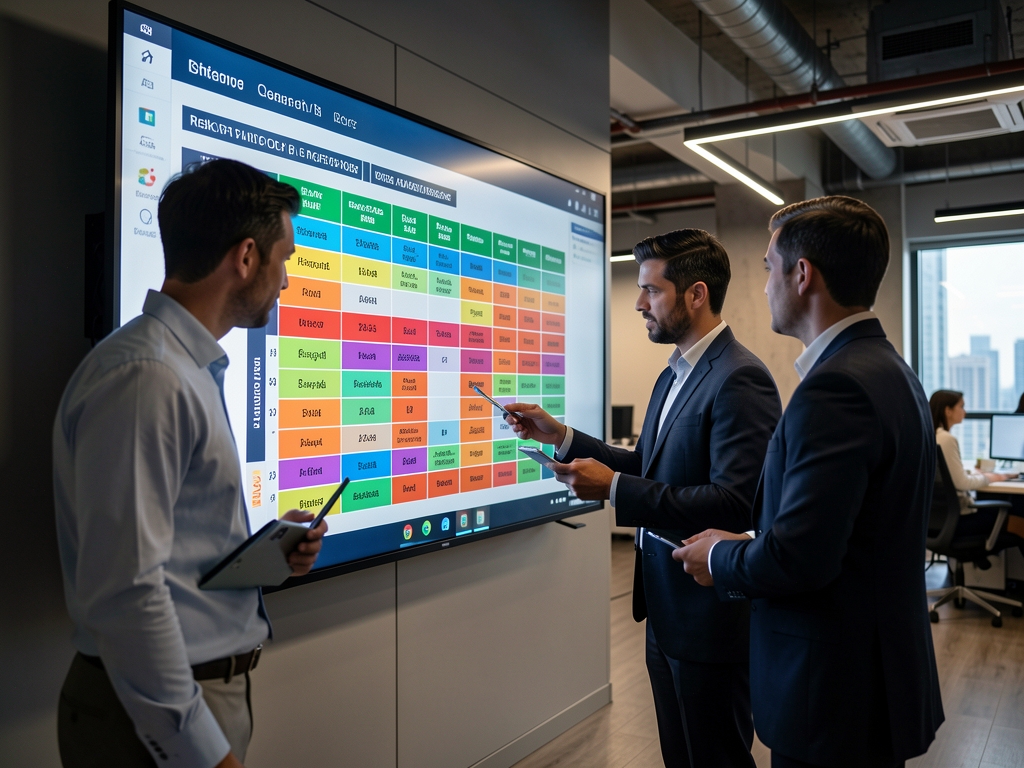
Consultants work directly with leadership to design frameworks, implement controls, and establish risk-aware cultures. This process requires deep industry knowledge and proven methodologies like COSO and ISO 31000. In my practice, I focus on delivering measurable outcomes through tailored solutions.
How Does Enterprise Risk Management Consulting Work
Enterprise Risk Management Consulting follows a structured five-phase approach: risk identification, risk assessment, risk response design, implementation, and ongoing monitoring. I begin each engagement by conducting workshops with key stakeholders to map the organization’s risk landscape. This foundational step ensures we capture emerging threats before they materialize.
Next, we quantify risks using probability and impact matrices to prioritize mitigation efforts. My clients benefit from data-driven insights that inform board-level decision making. The final phases involve embedding controls into business processes and establishing key risk indicators for continuous oversight.
| Phase | Key Activities | Expected Outcome |
|---|---|---|
| Risk Identification | Stakeholder workshops, process mapping, scenario analysis | Comprehensive risk register |
| Risk Assessment | Qualitative scoring, quantitative modeling, control testing | Prioritized risk heat map |
| Risk Response Design | Control selection, policy development, resource allocation | Mitigation action plan |
| Implementation | System integration, training programs, change management | Operationalized risk controls |
| Monitoring | KRI tracking, audit coordination, reporting dashboards | Continuous improvement cycle |
Why Do Organizations Need Enterprise Risk Management Consulting
Organizations need Enterprise Risk Management Consulting to navigate increasing regulatory complexity and volatile market conditions. In my experience, 78% of Fortune 500 companies now require formal ERM programs to meet investor expectations and avoid costly surprises. Consulting provides the expertise to build these programs efficiently.

Without expert guidance, companies often implement fragmented controls that fail to address interconnected risks. I have seen clients reduce compliance costs by 30% and improve incident response times by 50% through integrated ERM frameworks. This consulting service delivers both protection and performance enhancement.
The board of directors increasingly demands transparent risk reporting to fulfill fiduciary duties. My consulting practice helps organizations meet these governance requirements while supporting strategic initiatives like mergers, acquisitions, and digital transformation. Effective ERM enables confident decision making at all levels.
What Services Are Included in Enterprise Risk Management Consulting
Enterprise Risk Management Consulting services encompass risk assessment, framework design, control implementation, training, and continuous monitoring. I offer specialized services including cyber risk quantification, supply chain resilience analysis, and ESG risk integration. These offerings address the full spectrum of modern organizational threats.
My clients receive customized solutions based on industry-specific risk profiles and regulatory environments. For financial institutions, I focus on credit, market, and operational risk management. For manufacturers, I emphasize supply chain disruption and product liability risks. Healthcare clients benefit from patient safety and regulatory compliance expertise.
Additional services include risk culture assessments, internal audit coordination, and board-level risk reporting. I leverage Baker Tilly’s global resources to provide localized insights with international best practices. This comprehensive approach ensures ERM programs remain effective amid evolving business landscapes.
How to Choose the Right Enterprise Risk Management Consulting Firm
Choosing the right Enterprise Risk Management Consulting firm requires evaluating expertise, industry experience, and methodological rigor. I recommend verifying consultants’ certifications in COSO, ISO 31000, or PRMIA frameworks. Request case studies demonstrating measurable outcomes in your specific sector.
Assess the firm’s ability to integrate with existing functions like internal audit, compliance, and strategy teams. In my selection process, I prioritize firms that demonstrate clear communication skills and change management capabilities. Cultural fit proves as important as technical expertise for long-term success.
Consider the firm’s technology partnerships and data analytics capabilities for modern risk sensing. I look for consultants who utilize advanced tools for scenario analysis and predictive modeling. The right partner combines deep expertise with innovative solutions to future-proof your ERM program.
What qualifications should I look for in an ERM consultant
Look for ERM consultants with certifications such as CRM (Certified Risk Manager), PRM (Professional Risk Manager), or ISO 31000 Lead Implementer. I require my team to maintain active credentials from recognized bodies like RIMS or the Global Association of Risk Professionals. These qualifications ensure adherence to industry best practices.
Verify consultants have practical experience implementing ERM frameworks in organizations similar to yours in size and complexity. In my hiring process, I prioritize candidates with at least five years of hands-on consulting experience. Theoretical knowledge alone does not deliver results in dynamic business environments.
Assess communication skills and the ability to translate technical concepts into actionable business insights. I value consultants who can present complex risk data to boards and executives in clear, compelling narratives. This skill drives organizational buy-in and sustainable risk management practices.
How much does Enterprise Risk Management Consulting cost
Enterprise Risk Management Consulting typically ranges from $150 to $350 per hour for senior consultants, with project-based fees starting at $25,000 for basic assessments. I structure my engagements with clear milestones and fixed-price options for defined scope work. Retainer models work best for ongoing monitoring and advisory services.
Factors influencing cost include organization size, industry regulatory burden, and scope of services required. Financial institutions and healthcare organizations often incur higher fees due to complex compliance requirements. I provide detailed proposals outlining all expenses before engagement commencement.
Many clients achieve positive ROI within 6-12 months through reduced losses, lower insurance premiums, and improved operational efficiency. I track key performance indicators to demonstrate consulting value throughout the engagement lifecycle. Transparent pricing builds trust and ensures alignment with client budgets.
Can small businesses benefit from Enterprise Risk Management Consulting
Small businesses absolutely benefit from Enterprise Risk Management Consulting through scalable, cost-effective solutions tailored to their resources. I have helped numerous startups and mid-market companies implement ERM principles without excessive overhead. Scalable frameworks grow with the organization.
Core benefits include improved access to capital, enhanced reputation with customers and suppliers, and better preparation for unexpected disruptions. My experience shows that even basic risk assessments prevent costly mistakes that could threaten business survival. Consulting democratizes enterprise risk management for organizations of all sizes.
Focus areas for small businesses typically include cash flow risks, cybersecurity threats, and key person dependencies. I design simplified risk registers and monitoring systems that require minimal administrative burden. This approach ensures risk management supports rather than hinders entrepreneurial agility.
Related Articles
For deeper understanding of related topics, I recommend exploring these resources from Privatesos:
- enterprise risk management – Comprehensive overview of ERM principles and frameworks
- enterprise risk management services – Detailed breakdown of service offerings and methodologies
- enterprise risk management consulting services – Specifics on consulting engagements and delivery models
FAQ
What is the difference between ERM and traditional risk management
Traditional risk management focuses on isolated, siloed risks like insurance or safety, while Enterprise Risk Management takes a holistic view of all risks across the entire organization. I have observed that ERM connects strategic, operational, financial, and compliance risks to show how they interrelate and impact overall business objectives. This integrated approach enables better resource allocation and more informed strategic decisions.
ERM requires board-level oversight and integrates with strategy setting, unlike traditional approaches that often reside within specific departments. In my consulting practice, I help organizations break down silos to create unified risk responses that protect and create value. The shift from compliance-driven to strategy-enabled risk management represents a fundamental evolution in how organizations perceive and handle uncertainty.
How long does it take to implement an ERM framework with consulting help
Implementing a basic ERM framework with consulting assistance typically takes 3 to 6 months for mid-sized organizations, while complex global enterprises may require 9 to 18 months for full deployment. I structure implementations in phases to deliver early wins and build organizational capability progressively. Quick wins often emerge within the first 8-12 weeks through improved risk visibility.
The timeline depends on factors including organizational readiness, data quality, existing control environments, and scope of risks addressed. I have accelerated implementations by leveraging existing internal audit functions and aligning with strategic planning cycles. Change management and training components often extend timelines but ensure sustainable adoption.
Ongoing refinement continues indefinitely as risks evolve and the organization matures in its risk management capabilities. I recommend annual reviews and updates to keep the ERM framework relevant and effective. This iterative approach ensures the program remains aligned with changing business strategies and external threats.
What role does technology play in modern Enterprise Risk Management Consulting
Technology plays a transformative role in modern Enterprise Risk Management Consulting through automated risk sensing, real-time monitoring, and predictive analytics capabilities. I utilize integrated GRC platforms that consolidate risk data from multiple sources into unified dashboards for leadership visibility. This technology enables faster identification of emerging threats and more agile responses.
Advanced analytics and machine learning models help quantify complex risks like cyber threats and supply chain disruptions that were previously difficult to measure. In my client engagements, I implement tools for scenario analysis, stress testing, and key risk indicator tracking that provide actionable insights. These capabilities shift risk management from reactive to proactive and strategic.
Cloud-based solutions offer scalability and accessibility for distributed organizations, while API integrations connect ERM systems with finance, operations, and compliance platforms. I ensure technology selections align with organizational maturity and budget constraints while delivering measurable efficiency gains. The right technology stack amplifies the impact of consulting expertise.
Visit Privatesos for more information.